Showing posts with label Sony. Show all posts

Friday, May 2, 2014

Sly Cooper and M Plus One


I spent one magical week buried deep in Sly Cooper and the Thievius Raccoonus. I voraciously tore through the game's story and worked myself to the limit to clear the game's extra challenges. When I beat the game fully, I was rewarded with developer commentary unlocked for each stage. Whatever possessed me, I decided to take a listen. The Journey I took through Sly's development only made me appreciate the game all the more and introduced me to a fascinating concept: "M plus one."

For the uninitiated, Sly Cooper and the Thievius Raccoonus is a platforming game that challenges the player to win through stealth rather than combat. You play the role of the titular Sly Cooper, infamous thief, as he slinks, jumps, and swings around a wild variety of creative and stylish stages. In this game, the equally titular Thievius Raccoonus, a book containing the secrets of the Cooper family, has been stolen and separated page-by-page all over the world. Sly - and you - must use his family's legacy of skills and know-how to recover the pages, reassemble the heirloom, and thwart the ambitions of the villainous guilty party.

And I repeat, this is a stealth game. You are given a complex, hallway, building, etc. and your goal is to reach your target without being seen. All of the stages have tight security, so you'll be sneaking through the shadows, above everyone's heads, and taking shortcuts that keep you out of plain sight.  Therefore the environment design is very important not only to this game's presentation, but how it plays. Every power line, window, rail and pole is free game for getting around. And don't think this is all optional, because being caught or trying to engage an enemy head-on is recipe for disaster. You are a capable fighter able to single out targets, but you won't last long in a really hot area. Besides, it just feels cool to take secret paths and leap around rafters in a borderline parkour fashion.

You'll want to stay up and above this guard

I came for the story, the characters, the setting and the gameplay, and I stayed for the time trial challenges. Beating levels unlocks challenge versions of those stages. They aren't any different, but you'll be racing a strict timer. Beat the timer, and you beat the challenge. Beat the challenge, like I said above, and developer commentary is added to the game. And this isn't simply audio that you hear in a menu. The game actually places an object at the beginning of each stage that begins the audio log. If you're so inclined, you can play through the stage while the audio is playing. You can play the game and learn about the development process at the same time!

I essentially played the game three times. One for story, two for challenges, and third for the commentary. I am a complete sucker for any behind-the-scenes look at game creation, so I had no problem coasting through a third time with a developer talking in the background. Every stage had something new to note. The developer would talk about designing stages, character, enemies, the world, the story, and the gameplay. I distinctly remember one stage where the developer talked about how a stage's lighting worked for style and visibility. Sure enough, I looked around at the stage while I was hearing about the lighting and could absolutely see what the developer was talking about.

One topic that came up in the commentary was a concept called "M plus one." As described by the developer, M plus one is the design practice of introducing new concepts into the game and training the player to be proficient in those new concepts. "M" stands for "mechanic," and the "plus one" stands for the way which the game will gradually make the concept more challenging. This way, it forces the player to get better at that concept and prepare them for the puzzles and bosses ahead.

This game also has collectibles, colorful characters, great design, and more. I could go on but I can only fit so much in an article

Let's look at Sly Cooper and the Thievius Raccoonus as an example. If you want to get onto a higher platform, you jump to gain that height. However you can also jump to cross over gaps that you can't run over. Meanwhile, Sly has a cane that he uses in combat and as a way to operate levers. There are also poles that Sly can use his cane on to swing from and cross larger gaps. Now imagine instead of a gap, you're leaping off the side of a cliff and trying to land on a platform that is moving. See how M plus one works? You have these simple concepts, you hone them through a series of challenges, and then you combine these concepts to make all-new challenges that still fit with what you know about the game and the world.

Hearing it plainly like that is one thing, but where and when they place the commentary for their explanation could not be more perfect. You see, the explanation of M plus one comes relatively late in the game, when we've already had experience learning concepts and combining them without a name for it. In comes this developer talking about M plus one. At this point I am exploring around a casino-like stage while the developer rattles off examples of M plus one. And I kid you not, he talked about what I was doing at that exact moment.

In the casino stage, I was jumping between platforms. The platforms were actually large roulette tables, and they were spinning. This made it a little more difficult to jump properly since the very ground beneath me was moving me around. At the same time, there were bars of electricity that I had to jump over. When the roulettes weren't trying to spin me into those bars, they were spinning in the opposite direction of where I was trying to go so I would have a more difficult time jumping over the electricity! And right when I am dealing with this situation, the developer is talking about that very stage that I'm playing, that very obstacle I'm up against. I felt a connection with the developers at that moment. It really drove home for me that amount of care and planning went into this game.


The actual M plus one commentary - starts at about 1:38 in the video

My friends, I love this concept. It's one way to learn and I am pretty sure it's one of the most commonly employed methods of learning out there. But now we have a name for it, and a pretty cool name at that. The more I think about it, the more I realize it's good to have a name for the way we're learning and to really break it down. After all, what is one of the most common pieces of advice for tackling a large task? To break it down into smaller tasks. Good advice, but I know it's hard to do such breaking down when I'm flustered. The issue in my case is that I'm going the wrong way for my personal style. To break a big task down into smaller tasks, I'm still faced with making any sense of the daunting large task.

Using M plus one, however, the focus is on what I am capable of and how it equates to the end goal. For instance, I'm currently learning programming and have been tasked to make a bunch of programs from financial report generators to simple games. Often when I get these assignments, I look at what's required and my mind just burns out trying to figure out how to get there from a blank page of code. When I take inventory of what I know and how to use what I know to build up a program, I'm better able to calm down, find my center, and get to work.

If I want to make a calculator app, let's start from the ground up. I know how to make the program perform math functions. I know how to make the program take numbers from the user. I know how to make the program tell if the user puts in letters instead of numbers. I know how to make the program show the result of the equation. And so on and so on. From there, it's a matter of taking these things I know separately and combining them in a way that creates a program that acts like a calculator.


With some confidence and mastery of your basics, you too can be cool just like this speed runner!

This is a simple example, but it gets my point across. The real important part is to find where you are comfortable starting in your planning process and use that to its fullest effect. There are plenty of projects where you'll need to start from the top in order to spread the work among a team. But eventually, you will have to start and you will start from some sort of bottom. If you're too focused on the top to do your job or do it well, then M plus one will help you gain that focus. In that sense, we may think of M plus one as a jumping-off point for a task or project rather than a full guide from start to finish. I know it helps me out to, at some point, look directly at what I am holding in my hands. Just like Sly Cooper planning to snatch a treasure starting off with just his cane, wits, and agility.

How about you? Does M plus one ring a bell? Or do you have your own learning experiences with games you'd like to share? Perhaps you have your own project or task that can benefit from a little bit of M plus one planning. If you do, I want to hear about it.

Thursday, November 21, 2013

Dark Cloud 2 and Zealotry


Ah, Dark Cloud. This series has been on the sidelines of gaming culture since the days of the PlayStation 2. Far too long in my opinion! My passion for the series was recently reignited when I came into contact with a fellow video maker and I saw he has Dark Cloud videos on his channel. All of this remembering Dark Cloud reminded me of a story I want to share with you all!

For the uninitiated, Dark Cloud is a series of action/adventure games where the player takes control of a number of characters on a quest to save the world. Part of saving the world requires the player's party to venture into multi-floored dungeons as part of the storyline. The second game in the series differed from the first by featuring only two playable characters. But it made the most of those characters! Max, an inventor, is able to jump in a giant robot to completely whoop on enemies. Monica, a magic-using princess, is able to transform into monsters and use their abilities. And there is where my story begins.

At one point in the game, the player needs an item called the "Sundrop" in order to progress. The only way to get a Sundrop? Transform into the "Himarra" monster and talk to a Himarra. That's right, while your character is transformed into a monster, she won't be attacked by monsters of a similar type. You can even talk to your fellow monster as if they were a friendly non-player character. When you obtain the Sundrop, you even hear the Himarra's voice! I don't know about you all, but I got attached to the Himarra I talked to. Did I mention that you can just pick any Himarra wandering around the dungeon? That's right, the game doesn't just give you a monster to talk to. You actually have to find one yourself. That made the mission all the more personal to me.

This is a Himarra. Isn't it adorable?

That's why I was shocked at what happened next. After obtaining the Sundrop, I naturally thought "No reason to stay as a monster anymore," and transformed back into Monica. Imagine my surprise when the Himarra I was talking to moments before starts attacking me! "What's going on?" I thought. I pleaded to the screen, "Why are you doing this? It's me! We were talking a minute ago! You helped me!" but the Himarra would not - or could not - listen.

Eventually, I had to act. Putting on my best action movie drama face, I muttered, "Don't make me do this." But I had to. I forced Monica to cut down this monster that she had been fraternizing with moments before. Monica herself didn't even flinch to destroy the monster. She acted with the same neutral conviction that the monster had. I alone harbored this connection that didn't even involve me.

Okay, perhaps I'm embellishing the drama of this anecdote. A little. Especially considering I know why things turned out the way they did. In reality, the monster was nothing more than a construct of a game. It was a set of pixels on the screen programmed to behave in certain ways under certain circumstances. In this case, the monster was programmed to be hostile to the player unless the player assumes the form of a similar creature. In no capacity is the monster able to observe, learn, think, and defy its original programming. There's just no need for that in the game.

And yet, I still reacted this way. Who am I to be feeling this way, anyway? If this mission didn't even exist in the game, I wouldn't have second-guessed chopping down that Himarra in the first place. And that certainly didn't change anything afterward. What is it about connecting with that one video game enemy that's getting me to think so hard? I dove into the very core of the human condition to find an answer and I have come up with something.


At 14:45 you see the player get a Sundrop from a Himarra

You see, I humored the idea of the Himarra as a free-thinking being and went from there. The question then became why the Himarra would choose to attack me as soon as I presented myself as a non-Himarra creature. And, well, perhaps I'm not giving Dark Cloud 2 enough credit. What I'm chalking up to game mechanics may, in fact, be something more complex and tragic.

Where I'm more open to friendship, the Himarra may be more discriminating. After all, it lives in the wild where survival instincts take hold. The Himarra knows it can trust its own kind and probably has experience that tells it that there is no such guarantee with other types of creatures. Thus it stands to reason that when I transformed back into a human, the Himarra had a logical negative reaction. It could have thought that I was a spy amongst its ranks, or, even more heart breaking, it could have felt a sense of betrayal at seeing this new friend lie about who they are. Heck, this Himarra probably knows that humans are the most dangerous, destroying monsters left and right with ease. With this logic, the choice to attack as a pre-emptive defense is understandably obvious.

I got a little scared thinking this way. In a matter of seconds I took a course of action that was based on false assumptions, but phrased it in such a way that anyone would agree it was the right thing to do given the circumstances. I'm even more scared now because I am all too familiar with that way of thinking.

Attack-on-sight mentality of very common in our world, both in instinct-driven creatures and deep-thinking individuals. You do have the people who use pride in their identities to strengthen their roots and improve their character, but history shows conflict is in the blood of any culture and "us versus them" has been a time-tested mantra for unifying people, albeit of specific ideologies, for better and worse.

I remember when the first Dark Cloud was called a "Zelda-Killer." At least it gave us this great art!

Showing hostility as a roundabout way of showing support makes sense from a passion standpoint, but is flawed and stunts a person's growth as a cultured and free-thinking individual. For instance, I remember when Harry Potter was in full swing and I saw a news report on the series' exploding popularity. One interviewed mother said that she didn't care about Harry Potter nor will she bother reading it. The reason? Her family were already fans of A Series of Unfortunate Events and she resented Harry Potter for taking the thunder of her preferred series. Whether you prefer either book series, imagine that. A person willing to turn away from something new just because it was more popular than what she already knew.

There is a word for this sort of uncompromising conviction: Zealotry. Don't get me wrong, one can be a zealot for good causes and work their zealotry for the betterment of the world. But in general, I feel there's something uncanny about being too sure of yourself. This comes from personal  experience. Throughout my life I've found groups I can identify with and do well to fit in until I was expected to join in on badmouthing other groups or ways of thinking.

For instance, I talk to people all the time about watching what I eat. I do believe that a good life includes indulgence, and at the same time I'm still open to new things and trying the "less is more" approach to eating right. A few people I talk to, however, are deeply entrenched in one or the other and are very passionate about playing down the other half. I'll tell a calorie-cutting friend that I really enjoyed a meal out with a group last night and be told in return that I should stop letting my company coerce me into unhealthy eating habits. On the other side, I'll try getting water with a meal instead of soda to see how much I really miss it. Seeing this, my more wining-and-dining friends will tell me I'm acting like one of "them." I assume "them" refers to the insufferable sort of fitness enthusiasts who often go on record condemning common eating habits. Even if my friends don't mean to tear down the other side, their word choice still reflects that sort of mindset.

Without staying specific to one group, you can still see where I'm coming from. People can love what they love, but when they try to love through hate, that's going a bit far for me. If it gets to the point where someone could say "You're one of THEM," for any reason, then we're no better than the Himarra who's only following his programming.

I planned on putting in video game zealotry, but my search turned up nice consoles so I'm going with that instead. Found here. I really want to credit the source.

We're going leave this off on a community note. Let's share our own zealotries and see how or identities shape us. As for me, anyone can tell I'm zealous about video games and further the study of video games as a serious cultural medium. I may not agree when it comes to all criticism of video games, but only because I prefer to talk things out. Behind every piece of criticism is a story and a topic to explore further. If we just take the criticism at face value, that's no good. How about you? What are you zealous about? Games, movies, sports, comics, food, exercise, or even your work?

Thank you for reading, and I look forward to reading about how diverse this audience is!

-

Email: RBAshkenazi@gmail.com
deviantART: http://captain-gamer.deviantart.com/
ScrewAttack: http://www.screwattack.com/user/captain-gamer
Tumblr: http://captaingamer.tumblr.com/
Twitter: https://twitter.com/Captain_Gamer
YouTube: http://www.youtube.com/user/GamerHangVideos

Tuesday, April 23, 2013

Dead Space and Being the Silent Protagonist


I love the first Dead Space. By now, the Dead Space series has made a big name for itself and spanned three installments with some games and literature on the side. But before the brand took off, there was just the one really ambitious title. Dead Space has great atmosphere, looks incredible, employs creative enemy designs, and gives players a satisfying variety of weapons. It's also one of the definitive games that emerged from the boom of American-made horror titles in the late 2000s. Don't quote me on this, but I imagine the immense success of Capcom's Resident Evil 4 got that ball rolling.

There is one aspect of Dead Space that I think is vastly understated even today. Later installments even did away with this precedent that I thought was pretty important. I am of course talking about the fact that protagonist Isaac Clarke never spoke. Everyone else carried conversations naturally, but Isaac himself never got a spoken word in edgewise. The game covers for this by having all the conversations scripted in ways that don't require Isaac's input.

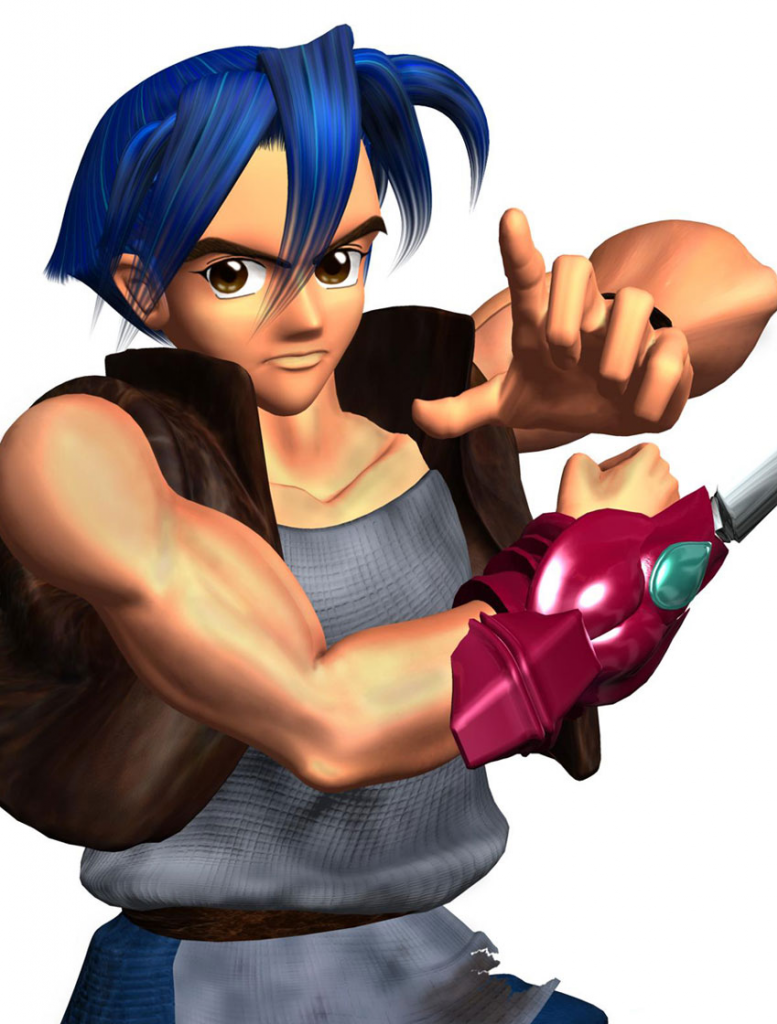
The silent protagonist in video games has been around since video games themselves. When the main character of a game lacks a voice, it becomes easier for the player to project themselves in the character's place to be more engaged in the game's settings and situations. Gamers most often think of iconic silent characters such as Crono, Gordon Freeman, Link, and other characters who never actually speak in written dialogue.


Vahn from Legend of Legaia is my obscure silent protagonist of choice

However, are these characters really silent? These silent characters clearly communicate through the course of their games. For instance, a character's dialogue with the main character will come off as a conversation with him or herself. "May I help you? Oh, you want the water gem? I can't give it to you unless you slay the dragon. You'll do it?" In Mario and Luigi: Superstar Saga, the plumbers have dedicated animations for when they speak. Even though their words come out as a string of comical gibberish, they clearly hold functional conversations with the other characters of the game world. There are games out there where the main characters don't communicate, but I feel this has the most impact in Dead Space.

Let's examine the situation: In Dead Space, Isaac is stranded in a derelict space vessel that is infested with horrifying monsters. He is not entirely alone since he maintains contact with two colleagues, Kendra and Hammond. While Isaac braves the depths of the USG Ishimura, Kendra and Hammond remain in relative safety while they figure out what's wrong with the ship and how to escape their predicament. For most of the game, everything Isaac does is not his idea. He simply moves from order to order issued to him by other people.

Further, the game is scripted and acted in a way that Isaac's silence just feels natural. The way the characters interact with him, you get the impression that they are used to carrying a conversation with Isaac. Instead of Isaac simply being slapped with the stigma of silence for effect, that may just be part of his character to be soft-spoken, if spoken at all. All of this, combined with the way he moves like a civilian, has Isaac strike me as an introvert. Quiet, maybe a little awkward, evasive but not reclusive, and generally a softer personality type than what Western media typically offers.


A great documentary going into the thought process of using a nonstandard hero.

Given this, your first impression of Isaac may be that he is a weak character. In fact, his situation could be downright insulting. One of the first things that happens in the game is Hammond ordering you to hack open a door with about as much enthusiasm as turning a doorknob. If you were in a bad mood, you might have felt that your character's life skills and expertise were being marginalized by his role.

You know what, you'd be right. Despite the fierce appearance of Isaac's protective suit, he never struck me as a person of action in the initial minutes of the game. It served as a great contrast for when as the game escalated, we'd see this character forced to rise to the situation.

And even though Isaac doesn't talk, that doesn't mean he can't think or feel. He feels terror plenty. Any time he takes damage or worse, you can hear his muffled cries of pain and fright through his helmet. Should you fall prey to one of the game's gruesome death scenes, you'll hear just what Isaac feels about the situation. I absolutely loved this aspect of the game since the muffled cries invoked a claustrophobic feeling because the character couldn't be heard properly. It goes to show that Isaac's silence becomes a source of strength since he maintains it in a hostile environment. Silence both of word and emotions. He is plenty scared, but isn't letting it affect his ability to do something about it.

The second way Isaac expresses himself is through his personal log. Though it's mostly a game mechanic to remind the player of what they're supposed to be doing next, it's still written in Isaac's "voice." The logs depict Isaac as rational, focused, nonjudgmental, and given the situation, scared. He rarely writes anything personal about others, unless it's a response to storyline developments. This limited exposure allows us to see Isaac as the most level-headed person on the ship. He clearly feels more confident in expressing himself with the written word above the spoken word.

Watch the first minute. Seeing Isaac straighten his posture to fight this monster is my favorite moment.

The big payoff in all of this character analysis is seeing Isaac get work done. Here we have this wallflower of a character and he's the one destroying monsters, making repairs to the ship, and saving the day. It's hard to appreciate this character development when it's actually us, the players, doing the real work. We're more inclined to celebrate our own victories rather than keep our perspectives all within the game world. Objectively speaking, Isaac can deliver. Though not very impressive as a communicator, Isaac shows his strength of character through his actions. We could have had a main character with all the vocalized confidence in the world who could have done the same thing, but because our first impression of Isaac was not as strong, that made his actions all the more meaningful.

The more I think about this and how organic of a character Isaac Clarke is, the more I thought about how this translates to the way we act and see others in the real world. I'll admit right here that I based my vision of Isaac Clarke largely on my own introverted self. As I analyzed Isaac and how his actions have meaning, I came to realize that I too benefit from my actions. Whenever I come out of my shell to do something, it always seems to grab attention. Conversations start, we keep in touch, and before I know it I have new friends and acquaintances that I am comfortable enough around to cut loose a bit more and approach.

Just like Isaac, we all have some area that we have our strengths in, our proverbial "good sides," if you will. We just have to figure out how to display this good side to others and use it as a gateway to introduce those others to our beautiful personalities. This is why self-help gurus often recommend volunteer work to help people find friends. The fact that you are doing volunteer work shows your fellow volunteers and others that you are the sort of person who does volunteer work. If you are artistic, find a venue in which your work can be displayed for others to see. I'm doing that right now by sharing this blog with all of you! And it has worked. I've met some new people and hope to meet many more as I continue to write these posts.

Now, how about you? What is your "good side" that you would love sharing with others as a way for them to get to know you? Can you play sports well? Do you like movies? On the other side of this post, which video game characters do you consider strong and well though-out? Maybe you see a character different than most people do. Maybe your reasons for liking a character are personal. I would love to hear all the varying responses and reasons. Until then, game out.

Tuesday, April 9, 2013

The Skylanders Mom and Gamer Networking


Given some time, shopping for video games with one's parents is going to become one of those essential childhood memories. I know that I cherish such memories. During my own trips to video game retail stores, I occasionally get  a glimpse into what the whole process is like nowadays. I've seen all sorts of experiences, ranging from the nagging kid whose parent buys a game based off a cartoon, to the encouraging parent purchasing the latest Mario for their grateful child. But sometimes, you see something different.

Browsing in the Electronics section one time, I overhear a mother and son in the Skylanders toys. For the uninitiated, Skylanders is an action/adventure series of games which contains a huge library of playable characters. You gain the ability to play as new characters by purchasing the action figure of that character and using a peripheral to plug the character in the game.

In the store, I actually saw in passing the son placing an action figure on the demo booth to see the character in action. He was seriously deliberating. Eventually, he goes to his mother and says he chose that character. And this is where it gets interesting. The mother takes one look at the character and says, "This looks like a big guy. Don't you play the fast guys?" to which the son responds that he wants to try a slow-but-strong character for once. They went back and forth for a bit, including one time when the kid tried a big character at a friend's house and said he didn't like it, leading to the kid saying he wanted to actually take it seriously.

What struck me about this exchange is that the mother and son were genuinely discussing strategy and logistics about the game. Normally, we'd come to expect the mother to sigh "okay," drop the toy in, and be on with her day. But here, she actually took the purchase seriously and wanted to talk it through first. Not as the credit card-holder trying to stave off a purchase, but as someone who understands what the purchase means to the child. She knew enough about the game to talk about it on the same terms as her child.

Every character in Skylanders comes with its own unique stat spread.


I was floored to hear this. I don't know if this is increasingly common now, but during my youth parents did not try to understand video games. The norm was that video games were not something that required further understanding. They were in the same league as simple toys. It's funny I say this so firmly because one of my parents was a subversion of this norm. My mother, much like the Skylanders mom, actually stopped to look at what I was playing and rationalize the bright colors on the screen. She knew what "characters" meant to video games. She understood what a "hit point" was. She saw how to recognize who the player character was without needing me to tell her. She knew what a power-up was and could alert me to when one pops onscreen.

Hearing the Skylanders talk made me think about a discussion I had before where I tried to make the argument that video games are just as complex and conversation-worthy as any real-world sport. Naturally, the other person had all of popular culture on their side and I had to concede. In light of overhearing this conversation, I'm thinking popular opinion is starting to sway the other direction. Now that video games are on the popular culture radar, my argument for the complexity of games has more ground to stand on.

Lastly, and just as importantly, even I could understand the conversation I was overhearing. Not because I've played Skylanders, but because I've played games in general. Games have a lot of things in common. In this case, the kid was used to characters that moved fast but could not defeat enemies quickly. This new character would move slow, but defeat enemies with less hits. He is swapping out the advantage of speed for the advantage of power and perhaps other capabilities.

Fighting games, by far, most emphasize the differences between characters and topics of discussion.

Thinking on that last point, I have come up with a term for how general video game knowledge allows someone to understand a game they haven't played yet. "Gamer networking" is what I've come up with so far. That is, networking with an emphasis on video games. In this day and age, "networking" mostly refers to a person socially engaging others to build a "network" of friends and acquaintances. People often network by emphasizing things they have in common, such as what movies they like, sports they follow, what they do for a living, and so on. This way a person can have a big network to be well-connected in many places among many types of people.

Gamer networking is interesting because video games are so complex. There are entire genres of games, and each game in each genre can be radically different from each other. And yet, video games all come from the same roots and therefore contain a lot of similarities as well. For instance, Final Fantasy is a very different game from Bioshock. However, both games have in common that the players attack enemies in order to win. In both games, the damage that players deal to enemies is quantified. In both games, the amount of damage can be increased in some way. In both games, the benefit of increasing attack power is taking less time to defeat regular enemies and being able to keep up with the more difficult encounters. Therefore, if a player of either of these games mentions a time for opportunity in which they increase their attack power, the other will know right away the basic benefits of that increase. And yes, players of both of these games will be able to join a conversation on using heavy characters in Skylanders.

Gamer networking is not just for people who freely identify as gamers. People who network over sports have discussions of a very similar sort. And then there's the fact that non-gamers have stormed the scene as casual and social gaming grow. Let's take one of the most prolific games of the modern era, one that every person reading this blog has either played, played secondhand, or heard about. Yes, folks, even players of Angry Birds can get in on the action. Angry Birds is a game more different from Skylanders, Final Fantasy, and Bioshock from each other, yet the concept of "more power" exists there as well.

Though Angry Birds does not emphasize defeating enemies, you still use force to knock down buildings using your birds. The individual birds cannot power-up, but using special birds is satisfying and mostly essential for getting the best results on stages. The Big Brother Bird in particular goes along with my point because it is a straight upgrade from the standard red bird character. It may not be as precise as the red bird, but precision is less of a factor when your bird can just demolish whatever it touches. It's not exactly the sort of quantified power in the other examples, but it is a relative increase in power all the same. Kind of a stretch, but the connection is there.

Just watch the first minute to see the big guy tear it up.

You see, the more you break down a video game into relatable problem-solving tasks, the more easily someone can understand it. The less a person knows about games, the simpler you'll have to get. Getting someone on your level requires effort and patience, but it is worth it. I've had long conversations with people who have no prior interest in games but every good intention to understand what they can, and all because I worked my way up.

It seems that we as gamers also have the progress of technology on our side. The more people come to rely on bright screens and dealing with user interfaces, the less foreign video games feel. In fact, video games may turn around and help us in the real world of situational awareness and problem solving; but that's a topic for another time. Either way, the Skylanders mom provided a good window into what could be when it comes to public knowledge and attitude surrounding video games. Perhaps in the future, more complex games will work its way into global culture; and not just a split-second of Call of Duty or an offhand app reference.

So, what about you? What experiences have you had in gamer networking? Ever tried explaining a game to your parents? Invited your friends over for some game time and had some banter? Or maybe you've butt heads with another game online about the superiority of one character or another. I know we've all done it, and I want to hear it. Until then, game out.

Thursday, March 21, 2013

Quick Time Events and the Subconscious


The laugh track. The sound board. The wide-angle lens. As media evolves, it develops new techniques. Either because of advances in technology, or simply because an idea sees great success and becomes a trend. Video games have seen plenty of its own techniques as the time has passed. One of the more divisive techniques of the modern school of gaming is the quick time event.

For the uninitiated, a quick time event (QTE) is a gameplay mechanic in which the game prompts the player to press a specific button to achieve a certain goal. This is different from regular gameplay in that these button-presses are context sensitive. Where the A button normally makes you jump, in a QTE you'll be prompted to press the A button to have your character jump out of the way of a falling rock. QTEs are characterized by being reaction-based and generally trying to give a gameplay translation for a character's instincts.

I can trace the evolution of the quick time event in three landmark games. The first game is Shenmue, released for the Dreamcast in 1999. During the course of the game, main character Ryo Hazuki is put in several situations where he must avoid something, catch something, or give chase to someone. In particular, the chase scenes involved Ryo dodging obstacles and choosing paths. For the cinematic effect, regular gameplay was probably not intricate enough or too awkward. Thus, the scene was depicted as a cutscene with quick time events as input. The scene changed depending on the player's success with the quick time events. Shenmue implemented QTEs so effectively that it put the concept on the map for future games to build on.

The Wii literally shook things up by incorporating motion controls.

The next game in my analysis is Resident Evil 4. Aside from forging new ground in third-person shooter games, I find this game incorporated quick time events not unlike Shenmue. In fact, Resident Evil 4 used them more frequently and in different ways. A cutscene would play for minutes, when all of a sudden the A button would appear onscreen. In the case of Resident Evil 4, failing a QTE would almost always result in a gruesome death for protagonist Leon Kennedy. Perhaps someday I'll revisit the concept of those death scenes in another post. QTEs also appeared in non-scripted situations, such as when an enemy grabbed Leon. This actually is a step up from a Resident Evil 3 mechanic which allowed the player to move in the opposite direction of an enemy and avoid damage. This is shown by having Jill Valentine execute a dodge ability.

The last game that I think leads up to quick time events as they are today is Dead Space. Dead Space, or at least my interpretation of it, is a game that aims to one-up everything about Resident Evil 4. The running and gunning was smoother, the environments were much more immersive, and the death scenes were even gorier. Once again, I'll come back to that sometime. And yes, Dead Space incorporated quick time events in similar ways. In fact, Dead Space took it a step further. Dead Space set up "scripted events" which required QTEs and other context-sensitive actions to progress. For instance, upon entering a certain corridor, the game is programmed to have a large tentacle monster grab Isaac Clarke and drag him to a hole. The player had to shoot the monster's weak point to save Isaac. However, the fixed camera made this difficult.

So what am I getting at here? Games like Dead Space, Resident Evil 4, and Shenmue have a sort of "pace" to playing them. Quick time and scripted events are part of the experience and the brand of these games. There are normalcy and consistency in these mechanics. Well, I've had an experience that told me there's more to this.

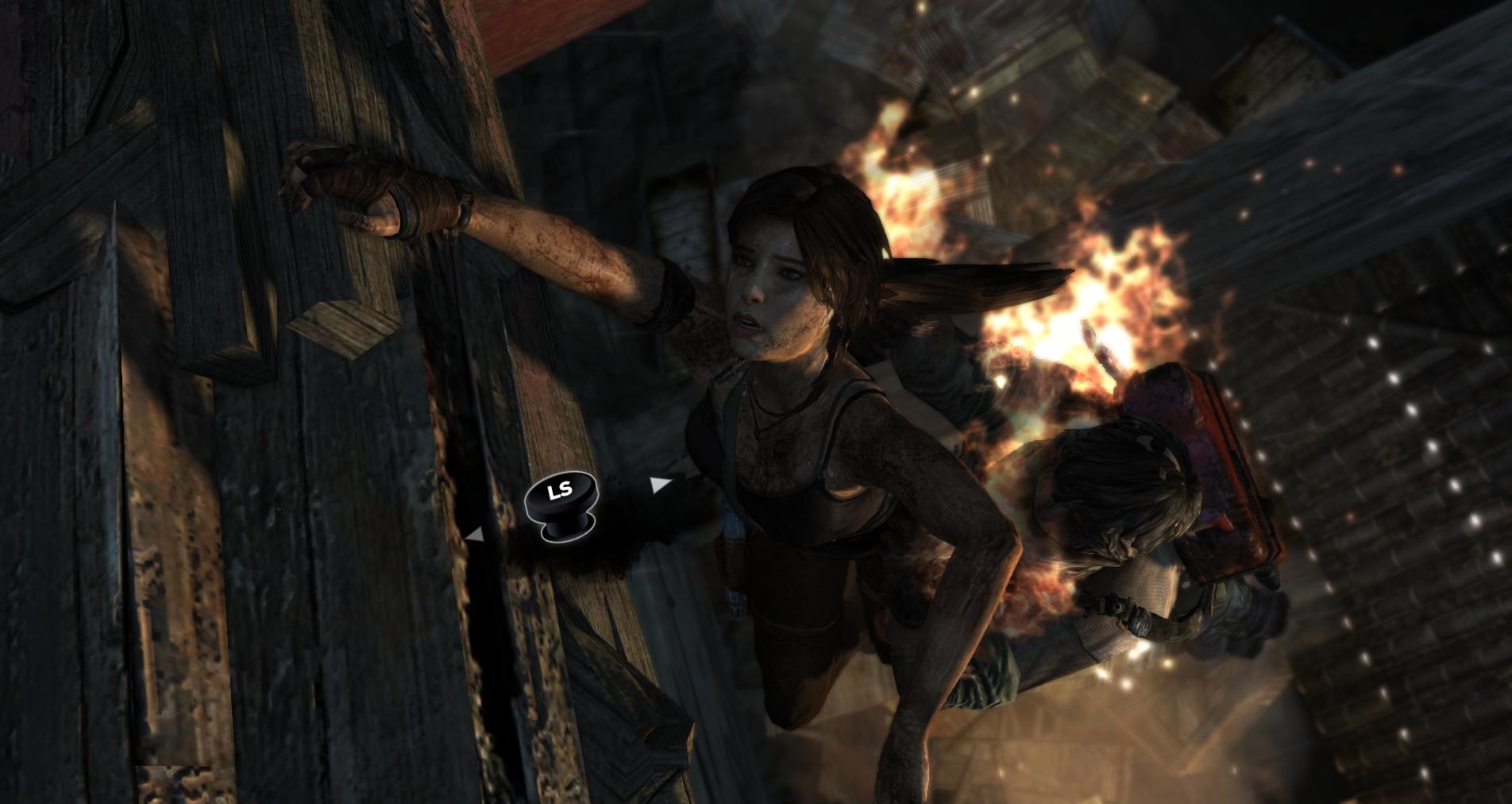
Failure scenes have become a separate art form. The new Tomb Raider sure has its share.

We've all had that one dream where something is attacking us and we can't do anything because it's a dream. In my case, I've dreamt that there's literally a snake in the grass in the front yard outside my house. I step into the grass, because it's a dream, the snake prowls around, lunges for me, end dream. I'm not particularly afraid of snakes, I guess I had recently watched or played something with snakes.

Then, one night, my dream changed. Same set-up, but this time when the snake lunged, time seemed to slow down and I saw a prompt for a dodge. The dream followed the prompt and allowed the snake to fall past me. The dream then prompted me to move in for a counter strike. I did, and, well, I can't really pull much more of the dream past that. Either way, waking up from that dream gave a very interesting feeling. My go-to dream for helplessness was completely turned around to be empowering. Because of video games? Because of quick time events?

Like I said before, quick time events are a reaction-based mechanic. They test your reflexes and hand-eye coordination by telling you a button to press and giving you little time to do so. Gamers typically have better association of buttons with functions than they do the labels of the buttons to their positions. I also mentioned how QTEs can be a gameplay translation of instinct. Instinct, which I define in simple terms as "being yourself quickly." That is, react as you would without taking time to revise in your head. It's empowering to know what to do and when. It helps you reaffirm your identity and proudly own it.

Heavy Rain, a PlayStation 3 title, was really ambitious with quick time events.

Video games always depict characters using instinct to save themselves or others from peril. In real life, ideally, peril is not ever-present. However, the opportunity to use our instincts is. For instance, I'm sure at some point in your life someone has approached you and said "hello." What did you do in return? Look at them and stare blankly while you decided between "hi," "hello," "good morning," or just a nod? Probably not. You picked a response and had a conversation. Your brain went through a little quick time event. Sure, nothing was at stake. Life would go on if you had said "apple," but all the same you were prompted and your instinct to greet the person back kicked in.

Saying "hello" isn't exactly the most intense example, but it is a relatable one. Real-life quick time events happen all the time. Some of them occurring in the form of decisions. Ever catch a ball that was flying straight toward you? Good job on that quick time event! Job seekers, have you ever seen a posting on craigslist that you qualify for but said "nah?" That was a quick time event that you willingly didn't respond to. The only difference is you won't come back to that moment to "get it right." This isn't guilt, just fact.

The fact that video game characters can respond to situations so quickly and expertly is why we see them as being strong. They don't second-guess what they're capable of, they just do what they can - or must. We too can be just like them. Sure, we won't be hitting any emergency brakes nor making jumps to safety, but we will be accomplishing commonplace feats that make us great people in our own home. Helping someone grab the milk on the high shelf, taking out the garbage, speaking up to volunteer, speaking up to not go through with something that you're being pressured into. All of these things which you may brush off or not feel "strong" enough to accomplish are more possible than you can imagine. It's not as simple as pushing a button, but it takes just as much effort when you set your mind to it.

Give it a try. See if, in your regular day, you can recognize a quick time event and do what you imagine it's prompting you to do. If you have any relatable experiences with real-life quick time events that you want to share, please post in any of the linked social media. I look forward to seeing responses. Until then, game out.

P.S.

I make quick time events out to be very promising, but in execution they actually have somewhat of a poor track record in gamer culture. See below for a humorous take.

Wednesday, March 13, 2013

Street Fighter IV and Owning Your Character


There's two things we know about Street Fighter character Guile for sure: His theme goes with anything and his advice to any person is that they "go home and be a family man!" Aside from these very memetic things, I wonder how much about Guile the common internet goer knows? Do they know his actual personality? His back story? His rank in the US air force? I'm sure that people who enjoy studying up on the Street Fighter mythos would know all that.

As for me, I actually did not care much for Guile. It's true. In my younger years, I COULD NOT fathom Guile's moveset. The core of Guile's special moves is the mechanic of holding the joystick in one direction, then quickly moving the other way and using an attack. For the life of me, I could not get that timing down. I guess I rather harbored those frustrated times and continued to overlook Guile for that reason.

In particular, the Flash Kick vexed me. Part of the command was 'up.' As in the same 'up' used in jumping!!

In my recent playing of Super Street Fighter IV: 3D Edition I made it a point to give every character a chance. When I played Guile, all that learned behavior came back. The natural aggression I learned playing Ken, Dudley, Rose, etc. clashed with the campy style that Guile promotes. One of Guile's strategies is to keep in a low blocking position so he can punish impatient opponents. Low block? Come on! This is Street Fighter! I want to go in fireballing and uppercutting! Granted I can now appreciate how intricate the fighting system is and how there IS more to it than quarter-circle-punching my way to victory... my stance on Guile hadn't changed.

In addition, I found Guile to be... well, kind of a jerk. In his win quotes, he tended to be condescending in that 'grown-up' way and put people down after winning over them. I guess that being a soldier, he feels a need to discourage others from combat and fighting and all that. Even so, I wasn't a fan.

A little later, my constant playing of the game lead me to take on a different sort of project. As part of that project, I needed to do a character study of Guile. Mind you, the reason I picked Guile was for his memetic qualities alone. All I really wanted was to get a feel for how he behaved in battle so I can build accurate fight scenes involving him. Naturally, the start of this was rather reluctant.

I got a feel for his martial arts in a narrative sense, but I was left wanting more from the gameplay perspective. Thus, I dedicated some time to practice and study.


In time, I got into it. My advanced gamer reflexes could now pull off the timing necessary for sonic booms and flash kicks. I learned the range of Guile's fierce attacks, doing sweeps to stall and charge a special move, and made it a game within a game to see if I can pull off Guile's Ultra attack, much more actually finish a match with it.

Suddenly, I was hyped for Guile. I was learning while I was mopping up and it was fun. I even took pride in his personal mannerisms like sunglasses, his dedication to his hair, and his occasionally ham-fisted demeanor. Because I lived this character, I internalized more his dedication to his mission and the merits of his patriotism. His attitude towards other fighters still left something to be desired, but I knew more than before that Guile was within his character to say those things. He wasn't particularly condescending... he was just Guile. Rather than accentuate the negative to support my aversion to the character, I looked for all the positive to see. After all, a character that I spent so much time learning can't be all that bad, right?


So... what happened here? I circled around Guile for half my life and didn't give him a second thought. Suddenly I gave him the benefit of a doubt and I'm an overnight family man? Not quite.

See, if Street Fighter came from and stuck to a non-interactive medium, say purely big/small screen franchise, I doubt I could have ever taken a shining to Guile. His no-nonsense personality was too abrasive for me. I would have supported him as a protagonist, but only that far. Expanding on his back story may give me more to judge him by, but the character we have here doesn't change much for it.

The video game angle is what caused this change in outlook. It's one thing to know where a character comes from, but it's another to actually BE that character. Having their skills at your disposal gives you a deeper insight into what it's like to be this character. Of course, we can't experience for ourselves the loss of Charlie or take on the strain of remaining a noble soldier while hatred plays your forced muse.

We CAN, however, slip ourselves into Guile's camo and wield his sonic boom. The more we learn a character and turn to them as an ambassador for the Street Fighter experience, the more influence this character can have on us. Suddenly, we are more sympathetic to Guile's mission. We are right there with him when he grips a fist in agony after a time-out loss. After Guile toasts to a temporary victory, speaking to his friend's tombstone, the word 'amen' may be on the tip of your tongue.

Then again, your experience owning a character in a tournament fighter probably isn't so dramatic or in-depth. At the very least, you'd echo a sound bite or mimic a mannerism when you're feeling particularly proud of a win over a real-life friend.


Movies, TV, books, etc. can do a lot to give you an in-depth look at a character. They can weave words and images, or make the character a consistent part of your life as you follow their journeys. Each medium has an advantage over the other to pull off the same narrative goal. Video games are distinct in that they are capable of saying, "You know what? Here. You take control and see what it's like." It's up to the game from there to use perspective, control, gameplay, scripted events, and much more at its disposal to tell its story.

Of course, not every game is an epic tale or descent into the very soul of its protagonist. Then again, what a game is or isn't depends entirely on the imagination of the gamer.